Uncategorized

BWWC 2027 Call for Papers

The 35th Annual 18th- and 19th-Century British Women Writers Conference

DESIGN

March 24-27, 2027 in Palm Springs, CA

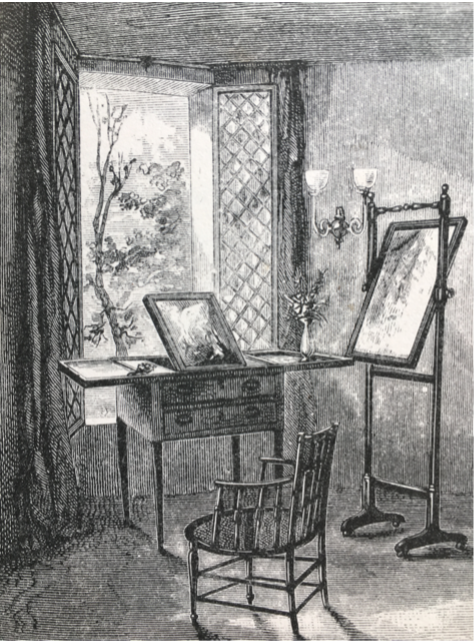
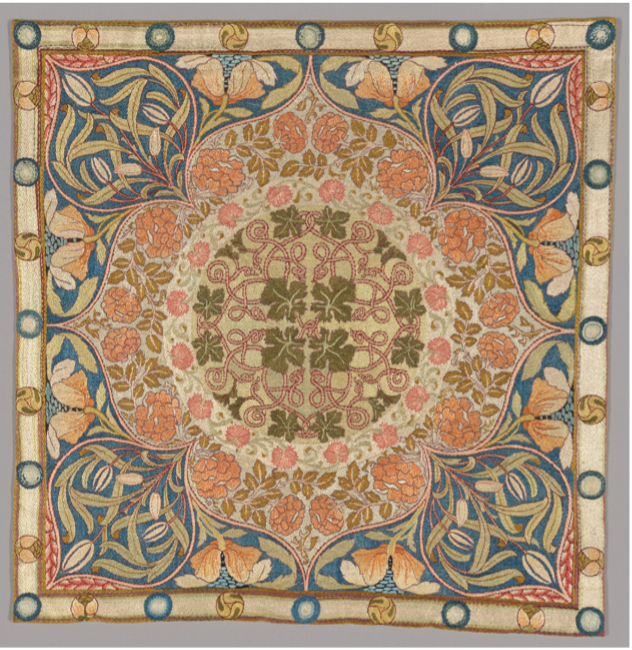
In a review of Owen Jones’s Grammar of Ornament (1856), George Eliot writes, “There is a logic of form which cannot be departed from in ornamental design without a corresponding remoteness from perfection; unmeaning, irrelevant lines are as bad as irrelevant words or clauses, that tend no whither.” The ethics of design–whether ornamental, architectural, characterological, or psychological–were under consideration in much 18th- and 19th- century British literature and culture. From “demoniacal design[s]” in Mary Shelley’s Frankenstein to romantic designs in Jane Austen’s Pride and Prejudice to drawing room designs in Ada and Rhoda Garrett’s Suggestions for House Decorating in Painting, Woodwork, and Furniture, women writers were clearly preoccupied with the various possibilities and risks associated with design. Where good design promised harmony, efficiency, and pleasure, bad design portended artifice, cunning, and conflict. In novels, characters who acted with design were represented as suspect, but in natural histories, forces that acted with design were represented as evidence of God. In art and ornament, design represented order and meaning; the lack of design represented chance and irrelevance. The process of designing also offered opportunities for individualism and collaboration and for thinking about the logic of aesthetics versus function. 

The organizers of the 35th annual 18th- and 19th-century British Women Writers Conference invite proposals for papers on the theme of “Design” in texts authored by women, non-binary, and gender-nonconforming writers of the long eighteenth and nineteenth centuries. We also invite applicants to propose papers that challenge and query the boundaries of British literature by engaging with texts situated within transatlantic and global contexts. In addition to presentations on 18th- and 19th-century literature, we invite presentations on history, art history, architecture, and related fields. 

Participants may use the following topics as general guidelines for considering the conference theme of design:

  • Visual media, including architecture, fashion and clothing, sculpture, decor and furniture, sewing and weaving 
  • Futurism and Modernism/modernism 
  • Urban planning and transportation
  • Designing public and private spaces
  • Movements, trends, imitation
  • Innovation and novelty   
  • The process of design (vision, creation, public response)
  • Functionality 
  • Accessibility
  • Sustainability 
  • The home and interior design
  • Cookbook and menu design
  • Family planning, anatomy, and reproductive health
  • Social design (community, romance, friendship)  
  • Aesthetic design, including plot and form 
  • Literary forms/formalism
  • Nature, landscape, and ecological design
  • Patterns/motifs/shapes
  • Intention and purpose
  • Scheming and cunning 
  • Style(s)
  • Artifice
  • Technology
  • Course and syllabus design, institutional design

Proposals for individual papers and panels are due October 18, 2026. For paper proposals, please submit a 300-word abstract and short CV (no more than 2 pages). For panel proposals, please submit a short description of the panel, a 300-word abstract for each paper, and a short CV (no more than 2 pages) for each participant. Instructions for submission can be found here: https://britishwomenwriters.org/. Please note that registration payment will be due in January 2027.

The conference will be held at the Hilton Palm Springs. The hotel is centrally located in Downtown Palm Springs with shopping, restaurants, and coffee shops within walking distance.

The submission form will open August 1, 2026.

Uncategorized

Registration for the BWWC 2026 in Auburn is now open!

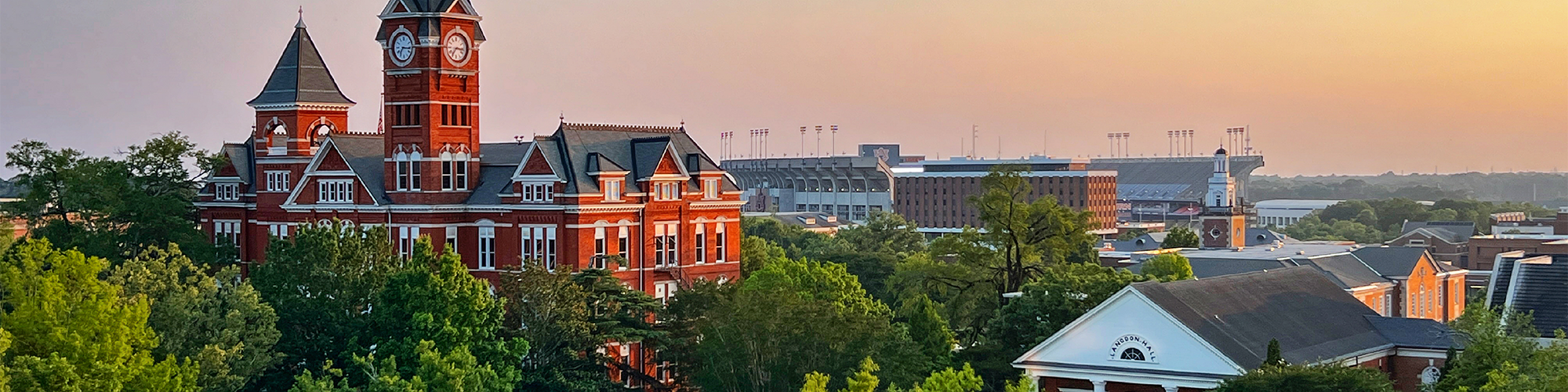
Registration for the BWWC 2026 in Auburn is now open! The early-bird conference registration fee is $175 for tenure-track and full-time faculty and $95 for graduate students, part-time faculty, and independent scholars. The conference fee covers all conference events apart from the banquet on Friday, May 8, 2026.

If you would like to participate in the banquet, please indicate so on your registration. The rate is $40 for tenure-track and full-time faculty, and $20 for graduate students, part-time faculty, and independent scholars.

Attendees are required to to become BWWA members when registering. The fee is $35 for tenure-track and full-time faculty and $15 for graduate students, part-time faculty, and independent scholars.

Please register early! A late fee of $25 will be added to all registrations after April 15, 2026.

Please begin your registration here: https://britishwomenwriters.org/registration/

We look forward to seeing you in Auburn in May!

Uncategorized

CFP for Vernon Lee Conference (U Liverpool, 1-3 September 2026)

Order and Chaos: Vernon Lee and the Politics of Disruption

University of Liverpool, School of the Arts Library, 1-3 September 2026. Attendance online will also be available. Registration opens 1 May 2026.

“It is only in our own day that people are beginning to question the perfection of established rules of conduct, to discuss the drawbacks of duty and self-sacrifice, and to speculate upon the possible futility of all ethical systems, nay, upon the possible vanity of all ideals and formulas whatever.” — Vernon Lee, Gospels of Anarchy, 1909

A radical breakdown of trust in institutions across government, media, education, religion—is currently gripping Western Europe and the US. An atmosphere of uncertainty and fear has been created: for individuals, for groups holding common goals, and even for whole nations as the spectres of authoritarianism and anarchy become increasingly real. Among much else, freedom of thought the right of assembly, personal/medical rights, gender preference and expression, efforts to save the environment—all are under attack throughout the world.

In 1908, Vernon Lee (1856-1935)—a writer always sensitive to new political, social and cultural formations—wrote Gospels of Anarchy with her signature blend of irony, and literary flair. The book explores, and sometimes devastates, the theories of Order and Anarchy, and of Utopia and Dystopia, promulgated by literary and philosophical giants of thenineteenth century such as Emerson, Tolstoi, Nietzsche, William James and H. G. Wells. In 1912, her book Vital Lies expanded on these themes. In a manifesto that speaks loudly to our own era of post-truth politics, she vehemently attacked those who were “redefining truth in such a way as to include edifying and efficacious fallacy and falsehood” and thus helping to dissolve the whole idea of truth altogether.

This conference aims to explore the political questions and challenges we face today through the lens that Vernon Lee brought to the same kind of challenges in her time: a lens that is simultaneously thought-provoking, curious, playful, radical, and multidisciplinary. Papers may wish to explore the breakdown and/or the imposition of illusory order or structure in various fields (educational, social, commercial, entertainment, literary, scientific, information), what damage it is doing and whether it can somehow be harnessed or managed to be beneficial; how resistance, rebellion and nonconformity in public, academic, and private life, thought and publication can modify “however infinitesimally, the opinions and ideals and institutions of the present and the future” as Lee suggests in Gospels of Anarchy.

We welcome presentations, lightning presentations, panels/ roundtables, workshops, or creative practice sessions that engage with the following topics (but are not limited to):

  • Freedom of Thought, Speech, and Expression
  • Pacifism, anti-violence, anti-nationalism, anti-imperialism
  • Protest, strikes, rebellion
  • Philosophy, ethics, and morality (individual, governmental, national, corporate)
  • Feminisms, local, global and radical
  • Trans studies
  • Human and animal rights
  • Psychology, psychiatry, neurology, and mental health
  • Environment, ecology, and the Anthropocene
  • Sustainable futures
  • Education and self-development

We would particularly like to hear about the ways in which Lee’s works speak to current events and trends, and postulate or enable the development of healthy, sustainable futures.

Papers (15 minutes) roundtable/ panel (60 mins), workshops (60 mins), creative practice session (60 mins), and lightning papers (10 mins).

We would be delighted to discuss proposals for panels or individual presentations, and to answer any questions you may have. Please submit questions, abstracts (300 words) and a short bio (100 words) in a Word/ GoogleDoc to the review committee email vernonleealliance@gmail.com by 18 January 2026.

Thanks to the generosity of the International Vernon Lee Society, we hope to offer bursaries to early-career/precarious scholars – more details on the application process will be made available in due course.

The conference is organized by members of The Vernon Lee Alliance (VLA):  Matthew Bradley (The University of Liverpool, UK), Elisa Bizzotto (Iuav University of Venice, Italy), Sally Blackburn-Daniels (Teesside University, UK), Mary F. Burns (Independent Scholar, US), Mandy Gagel (University of Michigan, US), Mary Clai Jones (Chadron State College, US), Tomi-Ann Roberts (Colorado College, US).
Announcements, BWWC, CFP

CFP for BWWC 2025 in Sioux Fall, South Dakota: Apply by Dec. 15, 2024!


The organizers of the 2025 British Women Writers Conference have released their full Call for Papers:

BWWC 2025 will focus on the theme “Transformations” as it relates to texts produced by women, nonbinary, and gender-nonconforming individuals within global and transatlantic contexts during the long eighteenth and nineteenth centuries. The organizers wish to consider how these texts represent, reflect, and embody transformation, as well as how they have proved and continue to prove transformative. How might the study of these texts generate transformation within the classroom, academic programs and disciplines, educational institutions, and academia at large? How might this work contribute to social, political, and ecological transformation at a time when efforts to address humanitarian and environmental crises are routinely and systematically met with resistance? What transformations must occur to ensure that the conditions of academic work are just, humane, ethical, and equitable?

See the full CFP, including submission guidelines and topic suggestions, here.

Announcements, BWWC, CFP

Full CFP for BWWC Colorado in 2024 out Now!

The organizers of the 2024 British Women Writers Conference have released the full Call for Papers:

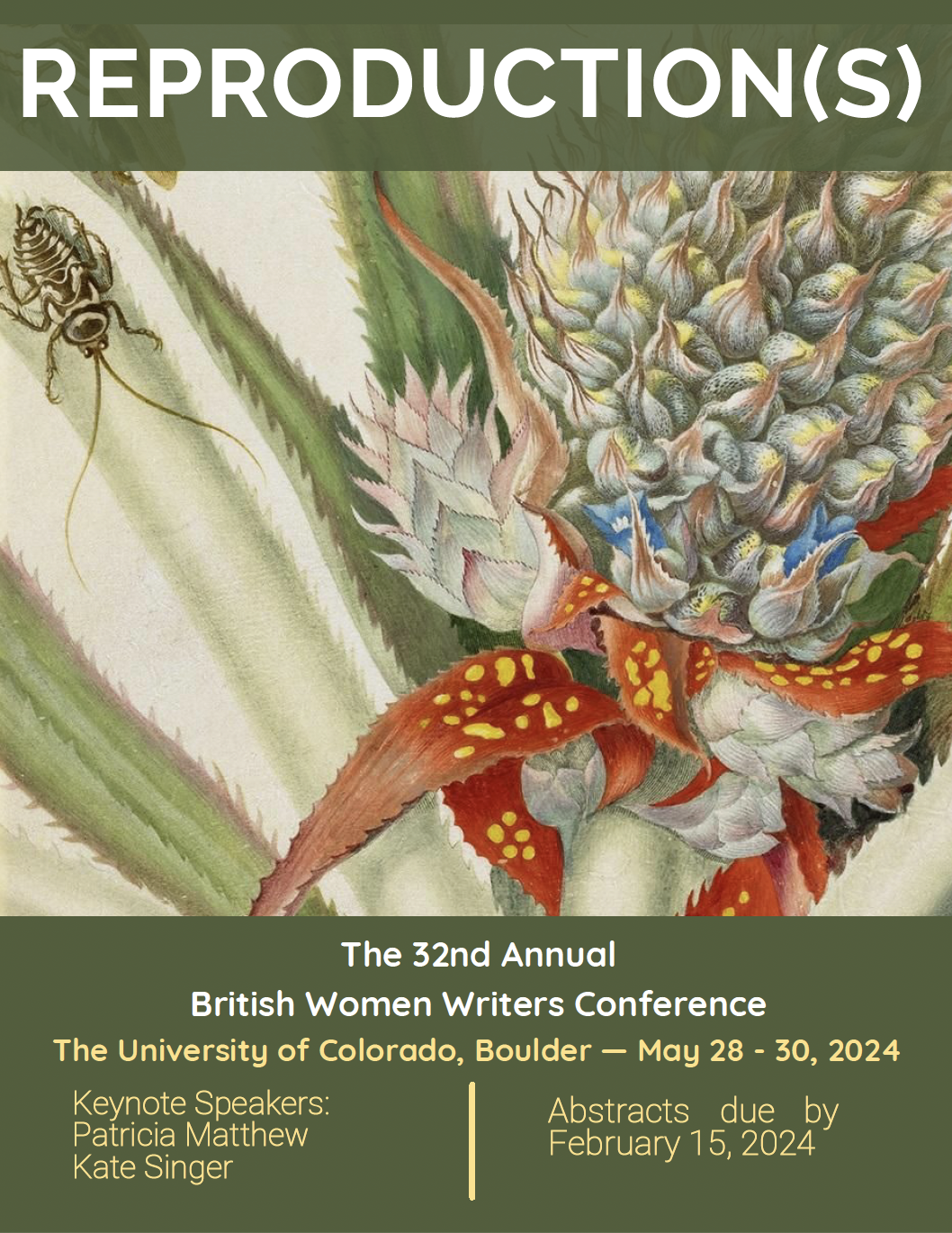
The organizers of the 2024 BWWC invite papers and panel proposals related to the theme of “Reproduction(s)” in global, transatlantic, and British women’s writing from the long eighteenth century to the present. Beyond the more obvious correlation between this theme and the centrality of reproductive rights to women’s lives, a vital resonance exists between this topic and the commitment of the British Women Writers Association to recover “women/womxn from the margins to the center of literary history.” The act of recovery (and all forms of reproduction, for that matter) contains the potential for re-emergence and mutation—for moments of slippage and opportunities for change. Participants are encouraged to be especially aware of the potential for disruption embedded within the concept/practice/enactment of reproduction(s).

This year’s organizers have deliberately chosen the plural form of “reproduction” because the word is simultaneously a noun, a verb, and an adjective. Also, reproduction is both biological and technological, as seen in the reverberating effects the industrial revolution had on blurring the supposed boundaries between women’s labor, leisure, and traditional familial structures. The ways in which aesthetics and print culture reproduce these cultural tensions reveal the continual transformations and mutations of women’s roles in society.

Intimately tied to these issues are forms of familial reproduction, ranging from eighteenth-century laws regarding inheritance to the suffrage movement of the twenty-first century. While many women were embracing new roles, their self-enacted freedoms often outpaced their legal rights. This topic is especially relevant when considering that women of color who suffered because of the transatlantic slave trade and colonialism had even fewer legal rights than white women of the middle and upper classes.

Of great interest are subversive methods of reproducing knowledge, for example, unsanctioned communication networks and the re-appropriation of cultural reproductions. It would be especially beneficial to have contributions that embrace alternative approaches to “reproducing” the traditional archive. In the spirit of reproduction(s), the organizers look forward to reading proposals that play with and challenge the limits of this theme.

See the full CFP, including submission guidelines and topic suggestions, here.