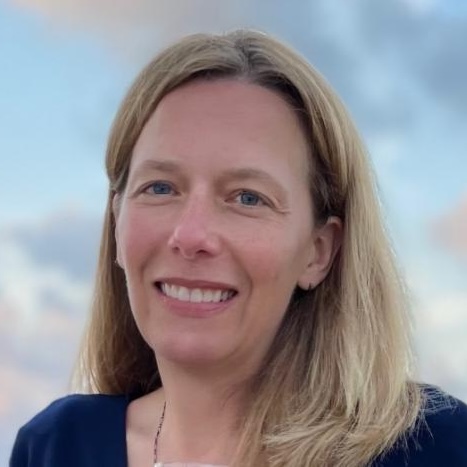
Elizabeth Miller
Elizabeth Carolyn Miller is Professor and Gwendolyn Bridges Needham Chair in English Literature at UC Davis. She is currently Executive Associate Dean of the College of Letters and Science. Before coming to Davis, she taught at Ohio University, the University of Michigan, and the University of Oklahoma. Her scholarly interests include nineteenth- and early-twentieth-century literature of Britain and the British Empire, ecocriticism and environmental studies, gender studies, and media studies. Her latest book titled Extraction Ecologies and the Literature of the Long Exhaustion appeared with Princeton University Press in October 2021. Previous books include Slow Print: Literary Radicalism and Late Victorian Print Culture (Stanford University Press, 2013), and Framed: The New Woman Criminal in British Culture at the Fin de Siècle (University of Michigan Press, 2008). In 2018, she guest-edited a special issue of Victorian Studies on “Climate Change and Victorian Studies” and in 2019 she published a co-edited volume titled Teaching William Morris. She also edited the first fully-annotated collection of George Bernard Shaw’s political writings (Oxford, 2021).
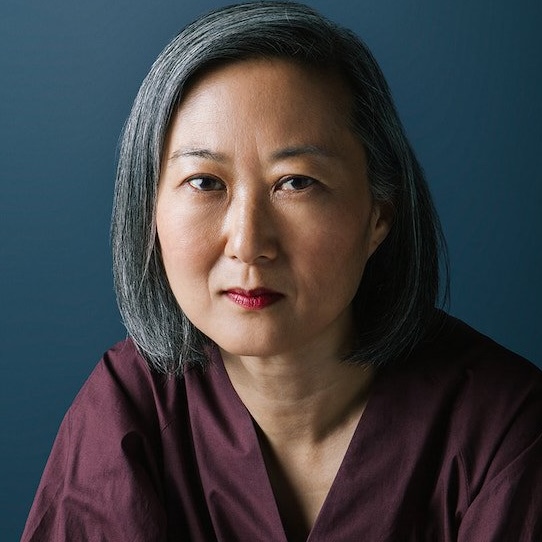
Julie Park
Julie Park holds the joint positions of Paterno Family Librarian for Literature and Professor of English at Pennsylvania State University. She is also the series editor of the Penn State History of the Book Series at Penn State University Press. My Dark Room (University of Chicago Press, 2023), Park’s most recently published monograph, examines spaces of inner life in eighteenth-century England, grottoes, from writing closets, country houses and landscape follies to detachable pockets, presenting the visual device of the camera obscura as a paradigm for understanding how spatial environments of daily life served as interactive media for experiences of interiority. Park is also the author of The Self and It (Stanford University Press, 2010). Park’s most recent editorial works include the special issue Getting Perspective (2021) for Word and Image, and the co-edited Organic Supplements: Bodies and Things of the Natural World, 1580-1790 (UVA Press, 2020). She is now co-editing Extra Extra!, a collection on the material history of the visually altered book. Park has lectured widely as an invited or keynote speaker at such institutions as Oxford University, the Freie Universität Berlin, University of Sydney, Radcliffe Institute for Advanced Study at Harvard University, University of Edinburgh, Center for Book Arts of New York City, and Columbia University.
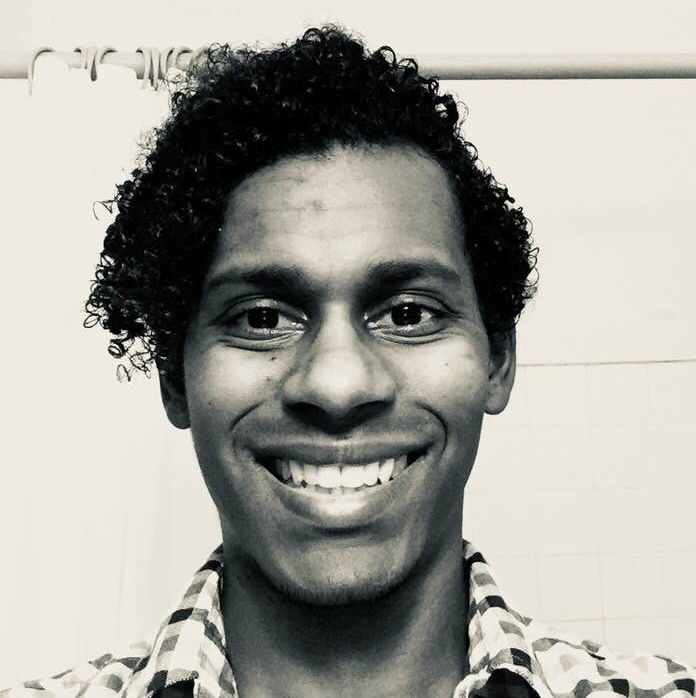
Julian S. Whitney
Julian S. Whitney is Byron K. Trippet Assistant Professor of English at Wabash College in Indiana, a residential liberal arts college for men. He teaches classes including Composition, British Literature 1800-1900, Manga and Anime, Law & Literature, and Writing for Video Games. His research scholarship focuses on the British Romantic poets with a particular emphasis on the Byron-Shelley Circle. In addition, he writes about eighteenth-century Black Atlantic abolitionists such as Quobna Ottobah Cugoano. More recently, his work has extended to East Asian popular culture such as manga and anime. His publications include an article on Lord Byron’s poem Darkness (The Byron Journal 2022), an essay about Ottobah Cugoano’s abolitionism (Studies in Romanticism 2022), and an article on Percy Shelley’s poem The Cloud (The CEA Critic). His most recent article engages Ottobah Cugoano and the issue of Black citizenship in Romanticism on the Net. Currently, he resides in Indianapolis, IN and enjoys taking advantage of the city’s multitude of cultural offerings. Outside of academia, he is an avid electric guitarist and tennis player. Julian also enjoys Japanese role-playing video games including his favorite video game franchise, Final Fantasy.
 British Women Writers Association
You must be logged in to post a comment.